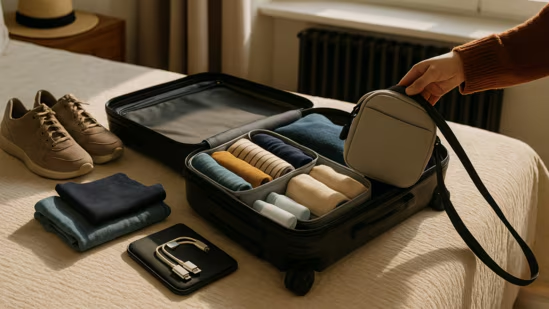
Packing anxiety rarely comes from the suitcase itself.
It shows up earlier, in the background of daily life, when the trip is still days away. Thoughts surface unexpectedly. Did we remember that last time? What if we forget something important? What if packing becomes chaotic again?
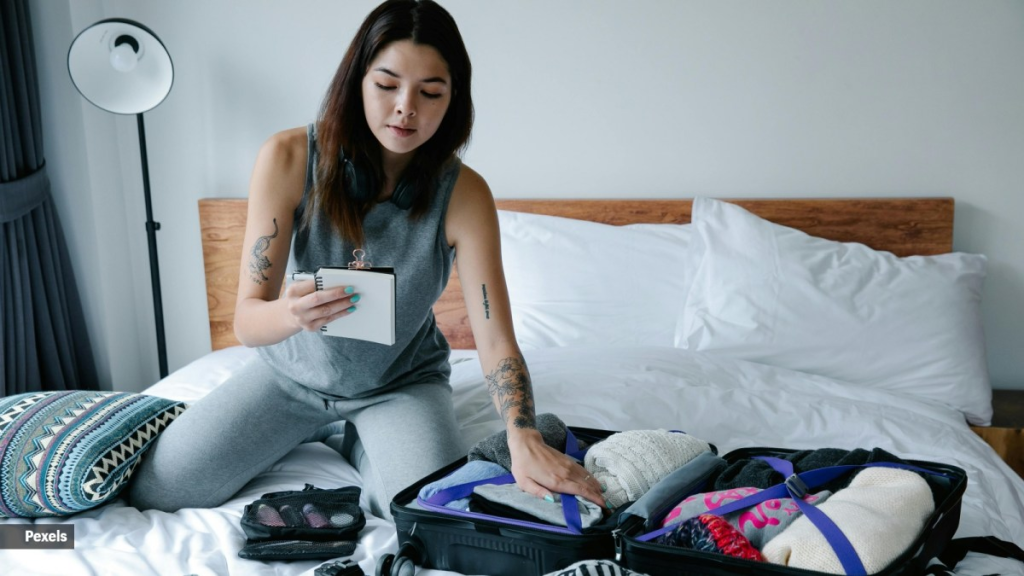
By the time bags are opened, many families are already carrying mental clutter.
This is where packing lists quietly help. Not as a rigid system or a demand for perfection, but as a way to move uncertainty out of the mind and onto something visible and manageable.
Over time, many families notice that packing lists reduce anxiety not because they guarantee readiness, but because they restore a sense of calm control.
Anxiety Grows in Uncertainty
Anxiety thrives when information is incomplete.
Before a trip, the mind tries to anticipate future needs without clear boundaries. What feels unfinished keeps resurfacing. Thoughts repeat because there’s nowhere for them to land.
Packing lists give those thoughts a place to go.
Instead of holding everything mentally, families can see what’s been considered and what hasn’t. The list doesn’t need to be perfect to be effective. It simply needs to exist.
Once thoughts are written down, they tend to quiet.
Lists Externalize Responsibility
One reason packing feels stressful is that responsibility lives entirely in the mind.
Remembering everything. Tracking progress. Noticing what’s missing. This invisible load often sits with one person, even when others are helping physically.
Packing lists externalize that responsibility.
Instead of remembering, families can refer. Instead of holding the whole system internally, they can look at something concrete.
Anxiety decreases when responsibility is shared between the mind and the page.
Lists Create a Sense of Progress
Packing anxiety often comes from not knowing where you are in the process.
Are we halfway done? Almost done? Missing something obvious? Without clear markers, the task feels endless.
A packing list offers visible progress.
Items get checked off. Sections get completed. The task begins to feel finite instead of expanding.
That sense of movement reassures the nervous system. Something is happening. Something is being completed.
Lists Reduce “What If” Spirals
“What if” thinking is a major source of packing anxiety.
What if the weather changes?
What if someone gets sick?
What if we forget the one thing that matters?
Packing lists don’t eliminate uncertainty, but they contain it.
Once a concern is addressed on the list—whether through packing or a conscious decision not to—its mental loop often closes. The brain no longer needs to revisit it repeatedly.
Lists help distinguish between real needs and background noise.
Familiar Lists Feel Safer Over Time
Packing lists become more effective with repetition.
The same list used trip after trip builds familiarity. Families begin to trust it. They remember that it worked before.
This familiarity reduces anxiety even before packing begins.
Opening a familiar list signals that this isn’t a new problem to solve. It’s a known process with a known path.
Predictability is deeply calming, especially before transitions like travel.
Lists Reduce Decision Fatigue
Packing involves many small decisions.
Which clothes. How many layers. What extras. Each decision draws from the same mental pool.
Packing lists reduce this fatigue by making many decisions once, rather than repeatedly.
When a list already exists, the question shifts from What should I bring? to Do I have what’s on the list? That shift conserves energy.
Anxiety lessens when fewer decisions are required in a tired state.
Lists Create Emotional Distance From Perfectionism
Without a list, packing often becomes emotional.
Second-guessing. Self-criticism. Worry about getting it wrong. These feelings intensify when decisions feel personal and final.
Packing lists create emotional distance.
They frame packing as a process rather than a test. If something is missed, it’s a list issue, not a personal failure.
That distance softens anxiety and makes the task feel more neutral.
Lists Help Families Pack Earlier
Anxiety often spikes when packing is delayed.
Late packing compresses time and increases urgency. Lists encourage earlier engagement because they make the task feel approachable.
Families can add to a list gradually. Items can be gathered over days instead of hours.
This slower pace reduces pressure and spreads effort more evenly.
Packing feels calmer when it’s not rushed.
Lists Support Shared Responsibility
Packing anxiety increases when one person feels solely responsible.
Lists make sharing easier.
Others can see what’s needed. Children can help with age-appropriate sections. Partners can divide categories without confusion.
Shared visibility reduces isolation, which reduces stress.
Packing lists don’t just organize items. They organize participation.
Lists Reduce the Fear of Forgetting
The fear of forgetting is central to packing anxiety.
Not because forgotten items are always catastrophic, but because forgetting feels like losing control.
Packing lists reduce this fear by offering reassurance.
Even if something is forgotten, families often realize that the list did its job. It captured what mattered most. What was missed may not have been essential after all.
That realization builds trust over time.
Lists Provide Closure
One of the most underrated benefits of packing lists is closure.
When the list is complete, the brain receives a signal: this task is finished.
Without that signal, anxiety lingers. Thoughts keep checking back in. Did we miss something? Should we check again?
A completed list allows the mind to let go and shift attention elsewhere.
That mental release is deeply calming.
Lists Reduce Emotional Overload Before Travel
Travel already brings emotional complexity.
Excitement. Anticipation. Uncertainty. Fatigue. Packing anxiety adds another layer that doesn’t need to be there.
Lists simplify the emotional landscape.
They don’t remove feelings, but they prevent overwhelm from accumulating unnecessarily.
When packing feels contained, families begin the trip with more emotional capacity.
Lists Help Separate Needs From Noise
Not everything that feels urgent is important.
Packing lists help families distinguish between what truly supports them and what simply feels reassuring in the moment.
By seeing items written down, families can evaluate them more clearly. Is this something we’ve used before? Does it solve a common problem?
This clarity reduces anxiety-driven packing decisions.
Lists Build Confidence Over Time
Each successful trip reinforces the list.
Families remember that it worked. That they had what they needed. That forgetting something wasn’t the end of the world.
Confidence grows not from perfect packing, but from repeated experiences of adequacy.
That confidence lowers anxiety the next time travel comes up.
Lists Create Predictability During Change
Travel is a major change in routine.
Packing lists offer one stable element during that change. Something familiar. Something repeatable.
This predictability grounds families when everything else feels in motion.
Anxiety often decreases when at least one part of the process feels known.
Lists Make Packing Feel Finite
Perhaps the greatest reason packing lists reduce anxiety is simple.
They make packing feel finite.
There’s a beginning. A middle. An end. The task doesn’t expand endlessly.
That sense of containment is deeply reassuring.
Packing Lists Aren’t About Control
It’s important to note that packing lists don’t reduce anxiety by controlling everything.
They reduce anxiety by clarifying what matters and letting go of the rest.
They don’t promise a flawless trip. They support a manageable start.
That distinction matters.
A Gentle Closing Reflection
Why packing lists reduce anxiety has less to do with organization and more to do with relief.
Relief from holding everything mentally.
Relief from endless decision-making.
Relief from uncertainty without boundaries.
Packing lists don’t eliminate unpredictability. They simply give families a steadier place to stand before stepping into it.
Over time, many families notice that the list itself becomes a quiet reassurance.
Not because it guarantees readiness, but because it reminds them they’ve thought things through—and that’s enough to begin.
AI Insight:
Many families notice that once their thoughts are written down, packing feels less urgent, even if the bags aren’t finished yet.