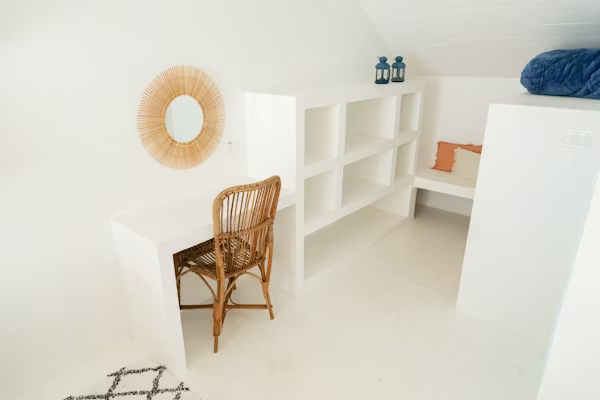
Owning less often begins unintentionally.
A family clears a space. Donates a few things. Stops replacing items as quickly. At first, it feels practical—less to clean, less to organize, less to store.

Then something deeper becomes noticeable.
Life starts to feel lighter.
Not because families have changed who they are, but because the background they live against is no longer as demanding. Owning less doesn’t just remove objects. It changes how daily life feels and how families relate to one another.
One of the first things families gain is mental space.
Every owned item asks for attention at some point. Where it goes. When it’s used. Whether it needs care. When there’s less to track, the mind rests more easily.
Families often notice they think less about managing life and more about living it.
Mental quiet isn’t dramatic, but it’s deeply relieving.
Another gain is time.
Not extra hours in the day, but fewer minutes lost to searching, sorting, and maintaining. Tasks begin faster and end sooner.
Time feels smoother because fewer interruptions break its flow.
Families often describe this as feeling less rushed, even when schedules don’t change.
Owning less also changes how homes feel emotionally.
Spaces become easier to enter and easier to rest in. There’s less visual noise competing for attention.
This calmer environment influences mood.
Families often notice fewer sharp moments and more patience, simply because the space itself isn’t adding pressure.
The home begins to feel more supportive than demanding.
Another important gain is ease in transitions.
Leaving the house, starting meals, or settling into the evening requires fewer steps when there’s less to manage.
Transitions soften.
Families move from one part of the day to the next with less friction, which improves daily interactions in quiet but meaningful ways.
Children often gain clarity from owning less.
With fewer belongings, children know what they have and where it belongs. Choices feel manageable rather than overwhelming.
This clarity supports independence.
Families often notice that children play more deeply and clean up with less resistance—not because of rules, but because the environment feels easier to understand.
Owning less also reduces comparison.
Fewer things mean fewer benchmarks for “having enough” or “keeping up.” Families feel less pulled by what others own.
Contentment grows when comparison fades.
What remains feels sufficient rather than lacking.
Another gain is flexibility.
When families own less, plans adjust more easily. There’s less attachment to managing objects and more freedom to adapt.
Changes don’t feel disruptive.
Life feels more responsive instead of rigid, which lowers stress during busy or unpredictable periods.
Owning less also affects communication.
With fewer logistical conversations about stuff—where it goes, who moved it, what needs fixing—families talk more about experiences and feelings.
Conversations feel lighter and more relational.
The mental bandwidth once spent on objects becomes available for people.
Families also gain emotional margin.
When the environment asks for less, patience stretches further. Small mistakes don’t feel as costly. Recovery happens faster.
Owning less doesn’t remove stress, but it reduces how much stress accumulates.
The day feels more forgiving.
Another subtle gain is confidence.
Families trust themselves more when life feels manageable. They second-guess less and feel less pressure to optimize every decision.
“Enough” starts to feel like enough.
This confidence reduces background anxiety and supports steadier moods.
Owning less also supports rest.
When the home doesn’t signal unfinished tasks everywhere, the mind settles more easily. Rest feels allowed instead of delayed.
Evenings feel more complete.
Sleep often feels deeper because the day ends with fewer loose ends.
Importantly, families don’t lose warmth by owning less.
What remains tends to matter more. Meaningful objects stand out. Shared spaces feel intentional.
The home reflects who the family is, not what they manage.
Over time, the benefits of owning less become normal.
Life feels smoother. Days feel lighter. The ease fades into the background because it’s no longer new.
Families often notice the difference most clearly when they enter spaces that feel heavier again and recognize how much effort they’re no longer spending.
Owning less didn’t simplify life completely.
It made it easier to live.
A Gentle Closing Reflection
What families gain by owning less isn’t deprivation.
It’s capacity.
Capacity for calm.
Capacity for presence.
Capacity for connection without constant effort.
When there’s less to manage, families have more room for what actually matters. Time feels gentler. Relationships feel steadier. Home feels supportive rather than demanding.
Many families discover that letting go of excess doesn’t shrink their lives.
It gives them back.
AI Insight:
Many families notice that as the number of things they manage decreases, a quiet sense of ease replaces the constant feeling of keeping up.