
Most families don’t think of themselves as heavy app users.
They aren’t constantly downloading new tools or chasing the latest updates. Instead, the same few apps get opened again and again, woven into the ordinary flow of the day.
These aren’t always the most exciting apps. They’re the ones that quietly earn trust by showing up when needed and staying out of the way when not.
Looking at what families actually use daily reveals something important. Real usefulness looks very different from what’s often advertised.
Daily Use Is About Reliability, Not Novelty
Apps that families open every day tend to be predictable.
They load quickly. They behave the same way each time. They don’t surprise users with sudden changes or demands for attention.
In family life, reliability matters more than innovation. When time and energy are limited, there’s comfort in knowing exactly what will happen when an app is opened.
Daily-use apps don’t need to impress. They need to work.
The Calendar App That Anchors the Day
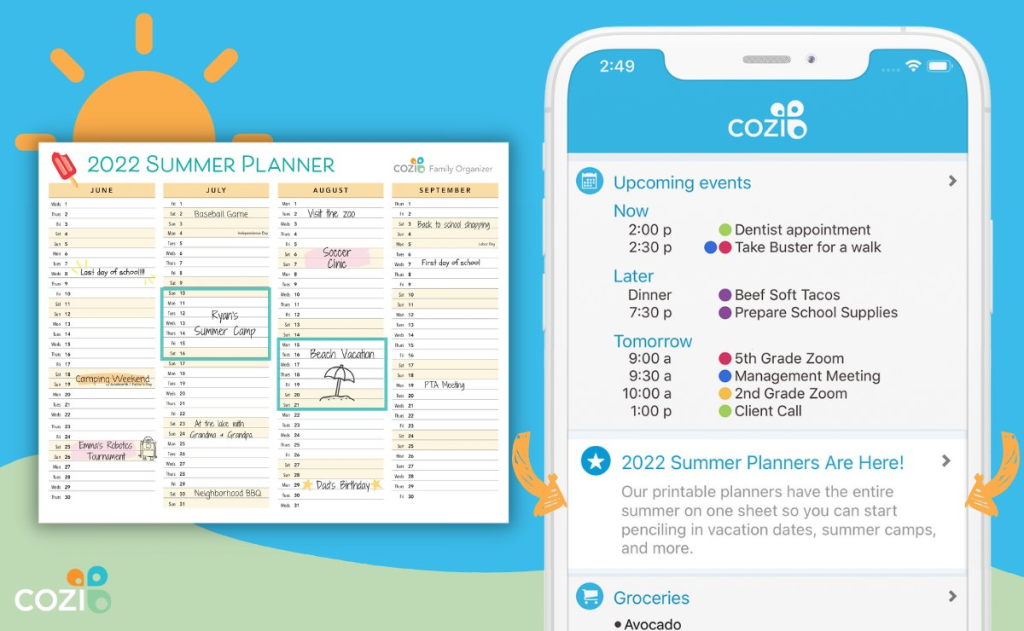
For many families, a shared calendar is the most-used app of all.
It’s checked in the morning to see what’s coming. It’s referenced during the day to confirm timing. It’s glanced at in the evening to prepare for tomorrow.
Its value lies in shared visibility. Everyone can see the same information without repeated reminders or explanations.
Over time, the calendar becomes less like an app and more like a shared reference point that quietly holds the family’s schedule together.
The Messaging App That Keeps Life Moving
A messaging app is another daily essential.
It handles quick coordination between parents, updates about schedule changes, messages to caregivers, and short check-ins with older children.
What makes it indispensable is immediacy. Plans can shift without long conversations. Information flows where it’s needed.
Daily use isn’t about constant chatting. It’s about having a reliable way to stay connected when life is in motion.
The Notes App That Catches Everything Else
A simple notes app often gets opened many times a day.
Not for long sessions, but for quick moments. Writing a grocery item. Saving a school detail. Jotting down something to remember later.
These small interactions add up. The app becomes a holding place for thoughts that don’t belong anywhere else.
Families use it daily because it reduces mental clutter. Knowing there’s a place to put things allows the mind to let go.
The Navigation App That Removes Uncertainty
Getting from one place to another is a daily reality for many families.
School drop-offs, activities, errands, unfamiliar locations. A navigation app offers reassurance by answering timing questions quickly.
It’s not just about directions. It’s about knowing whether there’s time to stop for one more thing or whether it’s better to head straight there.
That clarity helps days flow more smoothly.
The Music App That Shapes the Atmosphere
Music apps often become part of daily routines without much thought.
Background music during breakfast. A familiar playlist during cleanup. Calm sounds in the evening.
These apps aren’t always opened intentionally. Sometimes they’re simply part of the environment.
Families use them daily because music supports mood without demanding attention. It fills space gently.
The Photo App That Holds Meaning
A photo app may not be opened every hour, but it’s often used daily in small ways.
Sharing a picture. Looking up a memory. Adding a new photo from the day.
Its importance isn’t about frequency alone. It’s about emotional value.
Families return to it naturally because it holds moments they care about, without asking for engagement in return.
Why Productivity Apps Aren’t Always Daily Apps
Interestingly, many productivity apps aren’t used daily.
They may be helpful in bursts, but often require planning, organizing, or reviewing. In busy family life, that level of upkeep doesn’t always fit.
Apps used daily tend to support ongoing life rather than projects. They’re woven into routine rather than scheduled separately.
This distinction explains why some apps stay open and others fade quietly.
What Daily Apps Have in Common
The apps families actually use daily share a few key qualities.
They reduce effort instead of adding it.
They fit into routines that already exist.
They don’t demand attention when it’s not needed.
Most importantly, they feel familiar.
Familiarity builds trust, and trust leads to daily use.
Children Learn These Apps Through Repetition
Children often become comfortable with the same daily apps their parents use.
They learn where to find information. They understand how tools fit into routines. They observe when and why technology is used.
This repetition creates clarity. Technology feels purposeful rather than random.
Daily-use apps help children feel oriented within family life.
Why Fewer Daily Apps Feel Better
Families who feel calm around technology often use fewer apps daily.
Each app has a clear role. There’s less switching and less confusion. Information lives in predictable places.
This simplicity reduces mental load. The phone becomes a tool rather than a collection of tasks.
Daily use feels supportive instead of draining.
How Families Know an App Belongs
Families often know an app belongs when they stop thinking about it.
There’s no debate about whether to keep it. No reminders to open it. It’s simply part of the day.
If an app creates friction, it eventually falls out of daily use. If it creates ease, it stays.
Time reveals what truly fits.
A Calm Reflection
The apps families actually use daily aren’t the ones that promise the most.
They’re the ones that quietly support schedules, communication, memory, and mood. They don’t ask families to change how they live. They adapt to it.
In the end, daily use is the clearest measure of value.
Not because an app does everything, but because it does enough, consistently, and then steps back—allowing family life to remain the focus.