Simple packing systems often emerge quietly.
Not from a guide or a checklist, but from a moment mid-trip when someone realizes how easy it was to find what they needed. No searching. No unpacking everything. No mental replay of where something might be.
It’s usually after several trips—some heavier than necessary—that families begin to notice a pattern. The trips that feel calmer tend to rely on the same kind of packing: clear, repeatable, and simple.
Simple packing systems work best not because they’re clever, but because they align with how families actually travel.
Simple Systems Reduce Thinking When Capacity Is Low
Travel naturally lowers capacity.
Everyone is adjusting to new environments, routines, and rhythms. Decision-making takes more effort. Memory feels less reliable. Small obstacles feel bigger than usual.
Simple packing systems work because they reduce the need to think.
When items live in the same place every trip, the brain doesn’t have to search or remember. When categories stay consistent, finding things becomes automatic.
Less thinking means more energy for connection and presence.
Familiarity Is the Core of Simplicity
The most effective packing systems are familiar.
They don’t change much from trip to trip. The same bags. The same groupings. The same logic. Familiarity creates confidence.
Families often notice that when the system is familiar, packing feels easier even before the trip begins. There’s less second-guessing and less starting from scratch.
Simple systems work best when they’re repeated, not reinvented.
Simple Systems Make Items Easy to Find—and Put Away
One of the biggest sources of travel stress is searching.
Looking for socks in the wrong bag. Digging for chargers. Emptying a suitcase to find one small item.
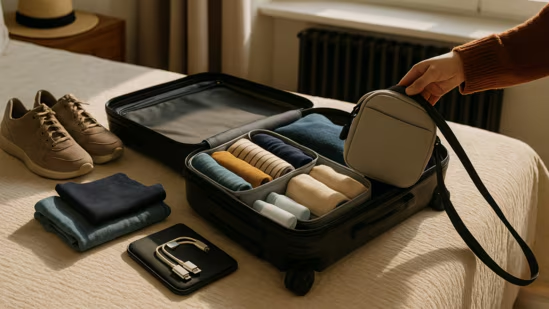
Simple packing systems work because everything has a place.
When items are grouped logically and consistently, finding something takes seconds instead of minutes. Putting things away feels just as easy.
This ease matters more than families often realize. It keeps small moments from turning into friction.
Systems That Match Daily Routines Feel Natural
The best packing systems mirror daily routines.
Morning items together. Bedtime items together. Eating-related items together. When packing reflects how the day actually flows, using it feels intuitive.
Families often notice that when their packing system follows routines instead of categories, things feel smoother. There’s less bouncing between bags and less mental tracking.
Simple systems work best when they support the rhythm of the day, not just storage efficiency.
Simple Systems Reduce Overpacking Naturally
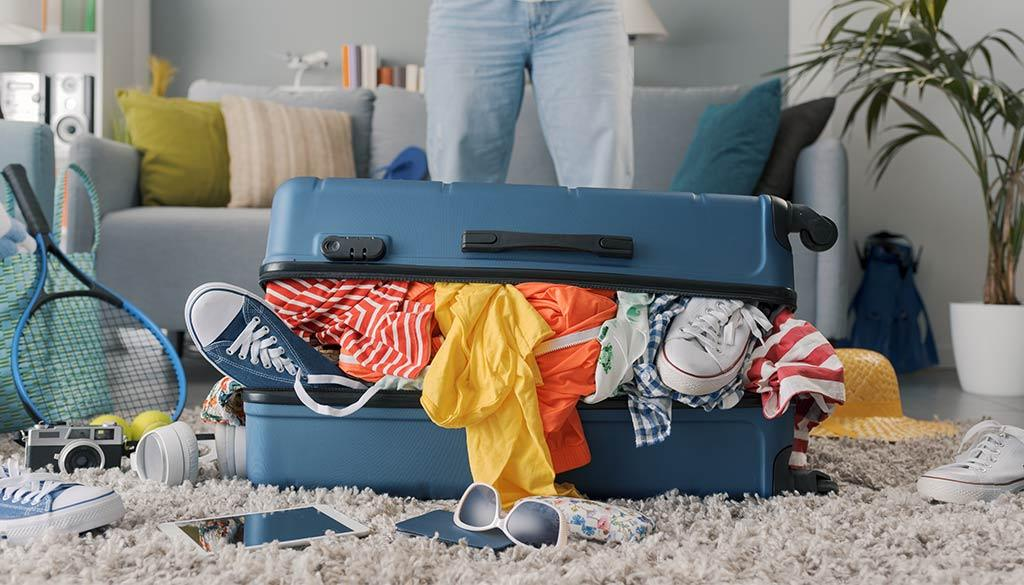
Overpacking often happens when there’s no clear structure.
Items get added “just in case” because there’s no visual sense of enough. Bags expand to fill uncertainty.
Simple packing systems create gentle limits.
When each category has a defined space, families become more intentional. If something doesn’t fit, it invites a pause rather than another bag.
These limits aren’t restrictive. They’re clarifying.
Simple Systems Lower Stress During Transitions
Travel is made of transitions.
Arriving. Settling in. Moving locations. Packing up again. Each transition asks families to reorganize.
Simple packing systems make these moments faster and calmer. Fewer loose items. Clear groupings. Predictable locations.
Transitions feel lighter when families aren’t managing chaos each time they move.
Children Benefit From Predictable Packing Systems
Children often respond well to predictability.
When their items are always stored the same way, they know where to look. Independence increases. Frustration decreases.
Simple systems help children feel oriented in unfamiliar places. They don’t have to ask where things are or wait for help as often.
This sense of competence supports emotional regulation throughout the trip.
Simple Systems Reduce the Mental Load on One Person
In many families, one person ends up holding the packing system in their head.
They know where everything is. They answer the questions. They solve the small problems.
Simple packing systems work best because they’re visible and intuitive. Other family members can understand and use them without explanation.
This shared clarity reduces mental load and makes travel feel more collaborative.
Systems Work Best When They Stay the Same
One reason simple packing systems are effective is consistency.
When the system stays the same across trips, families don’t have to relearn it. Packing becomes faster. Unpacking becomes easier.
Even when destinations change, the internal structure remains familiar. That stability provides comfort in unfamiliar environments.
Simple systems work best when they’re boring in the best possible way.
Simple Systems Make Downsizing Feel Safer
Letting go of extra items can feel risky.
Simple packing systems make downsizing feel safer because they provide structure. Families can see what they’re bringing and why.
Instead of packing out of fear, they pack out of clarity.
This clarity builds trust—not just in the system, but in the family’s ability to adapt if something is missing.
Systems That Are Easy to Reset Are More Sustainable
After a trip, energy is often low.
Complex packing systems make unpacking and resetting feel overwhelming. Simple systems reset quickly.
Items go back to their places. Bags get stored ready for next time. There’s no need to rethink everything.
Simple systems work best because they respect recovery time, not just the trip itself.
Simplicity Supports Calm, Not Perfection
Simple packing systems don’t eliminate mistakes.
Things still get forgotten. Plans still change. Needs still emerge unexpectedly.
What simplicity offers is calm.
When systems are simple, mistakes feel manageable rather than catastrophic. Families can respond without unraveling.
This emotional steadiness is often the true benefit.
Simple Systems Reduce Visual Clutter
Visual clutter contributes to stress.
Overstuffed bags, piles of loose items, and crowded spaces make it harder to settle into a place.
Simple packing systems reduce visual noise. Fewer items, grouped clearly, create a sense of order even in temporary spaces.
That order supports rest, which supports everything else.
Systems That Work Best Are Personalized
There’s no universal packing system that works for every family.
The most effective systems reflect real needs, not ideal ones. A family’s routines. A child’s sensitivities. The length and style of travel.
Simple systems work best when they’re shaped by experience rather than copied wholesale.
What matters is fit, not elegance.
Simplicity Builds Confidence Over Time
Each trip using a simple packing system builds confidence.
Families learn that they can find what they need. That they can manage transitions smoothly. That missing items are solvable.
Confidence grows quietly with each repetition.
Eventually, packing feels less like a hurdle and more like a familiar step.
Simple Systems Support Flexibility
Flexibility thrives on simplicity.
When there’s less to manage, it’s easier to adjust plans. To move locations. To change rhythms.
Simple packing systems don’t lock families into rigidity. They free them to respond to the moment.
Less management creates more room for adaptation.
A Gentle Closing Reflection
How simple packing systems work best isn’t about efficiency alone.
It’s about reducing the effort required to function away from home.
When systems are clear, familiar, and repeatable, families spend less energy managing belongings and more energy being together.
Packing becomes supportive instead of stressful. Travel feels lighter, not because everything is controlled, but because less needs controlling.
Over time, families often realize that simplicity isn’t something they gave up to travel better.
It’s something they gained.
AI Insight:
Many families notice over time that when packing feels predictable and easy to reset, the trip itself begins to feel calmer, even before the journey starts.