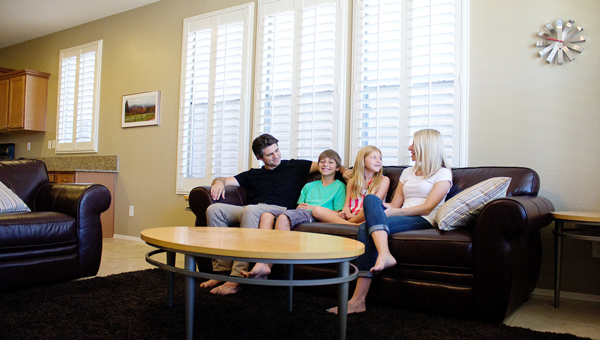
Minimal living often begins as a practical shift.
A family clears a room. Reduces what’s being managed. Stops adding without intention. At first, the change feels physical—fewer objects, simpler spaces, easier cleanup.
Then something else becomes noticeable.
Life feels lighter.
Not because responsibilities disappear, but because the background of daily life stops pulling so much attention and energy. Minimal living feels lighter because it quietly reduces the weight families carry without asking them to try harder.
One of the first ways minimal living feels lighter is mentally.
Every object holds a small claim on attention. Where it belongs. When it’s used. Whether it needs care. When there are fewer objects, the mind tracks less.
Thoughts settle more easily.
Families often notice they feel less mentally busy, even when their schedules remain full. The reduction in background thinking creates a sense of calm that feels physical as well as emotional.
Another change appears in emotional tone.
When the environment is simpler, emotions don’t stack as quickly. Small frustrations don’t escalate as easily. There’s more room to pause before reacting.
Minimal living doesn’t remove emotion.
It reduces the pressure that amplifies it.
Minimal living also changes how the body moves through space.
Clear paths and open surfaces allow movement without constant adjustment. The body doesn’t brace or rush as much.
Movement slows naturally.
Families often notice they move more intentionally and feel less tense at home simply because the space allows it.
This physical ease contributes strongly to the feeling of lightness.
Another shift happens in how time is experienced.
When fewer things interrupt attention, time feels less fragmented. Tasks begin and end more smoothly.
Families often describe days as feeling less rushed, even when nothing has been removed from the schedule.
Time feels lighter because it’s less interrupted.
Children often feel the effects of minimal living clearly.
With fewer options competing for attention, children feel more oriented. Choices feel manageable rather than overwhelming.
Play becomes deeper and calmer.
Families often notice fewer overstimulated moments—not because behavior is managed differently, but because the environment supports focus and ease.
Minimal living also supports independence.
When spaces are simple and belongings are accessible, children know what they can use and where things belong.
This clarity reduces tension and builds confidence naturally.
Adults often feel a reduction in pressure.
With fewer items to manage, adults carry less invisible work. There’s less reminding, organizing, and correcting throughout the day.
This relief changes how adults show up emotionally.
Tone softens. Patience stretches further. Presence becomes easier.
Minimal living lightens not just the home, but the emotional load adults carry within it.
Another benefit appears in transitions.
Leaving the house, starting meals, ending the day—these moments often carry stress. With fewer steps and fewer distractions, transitions soften.
Daily life flows with less friction.
Minimal living also affects rest.
When the environment isn’t filled with visual reminders of unfinished tasks, rest feels more complete. Sitting down doesn’t come with mental lists.
Evenings feel contained.
Sleep often feels deeper because the day ends more clearly.
Rest becomes part of life instead of something postponed.
Another subtle benefit is reduced comparison.
With fewer possessions, families feel less pulled into measuring what they have against others. Contentment grows when there’s less to evaluate.
Enough starts to feel sufficient.
Minimal living also creates faster recovery.
When mess happens, it doesn’t spread as far. Resetting feels manageable. The home returns to balance quickly.
This quick recovery reduces stress.
Families don’t feel pressure to maintain perfection because returning to ease feels possible.
The environment becomes forgiving.
Another gain is confidence.
When daily life feels manageable, families trust themselves more. They stop second-guessing choices and overthinking decisions.
Life feels workable.
Importantly, minimal living doesn’t feel empty.
It feels intentional.
What remains becomes more visible and more appreciated. Meaningful objects stand out. Shared spaces feel purposeful.
Minimal living clarifies what matters instead of removing it.
Over time, the lightness becomes normal.
Families often stop noticing it—until they enter a more crowded environment and feel the contrast immediately.
The calm has been doing quiet work all along.
A Gentle Closing Reflection
Why minimal living feels lighter isn’t about having less for its own sake.
It’s about carrying less.
Less mental tracking.
Less emotional friction.
Less pressure to manage everything at once.
When families reduce what demands their attention, energy returns naturally. Calm grows quietly. Life feels easier to inhabit.
Many families discover that minimal living didn’t simplify who they are.
It simply removed the extra weight—so daily life could breathe again.
AI Insight:
Many families notice that as they manage fewer things each day, life begins to feel lighter because less attention is constantly being pulled away.