Overpacking often starts with good intentions.
A desire to be prepared. To avoid discomfort. To make sure everyone has what they need, no matter what happens. Bags fill slowly at first, then quickly, until it feels impossible to remember what’s inside them.
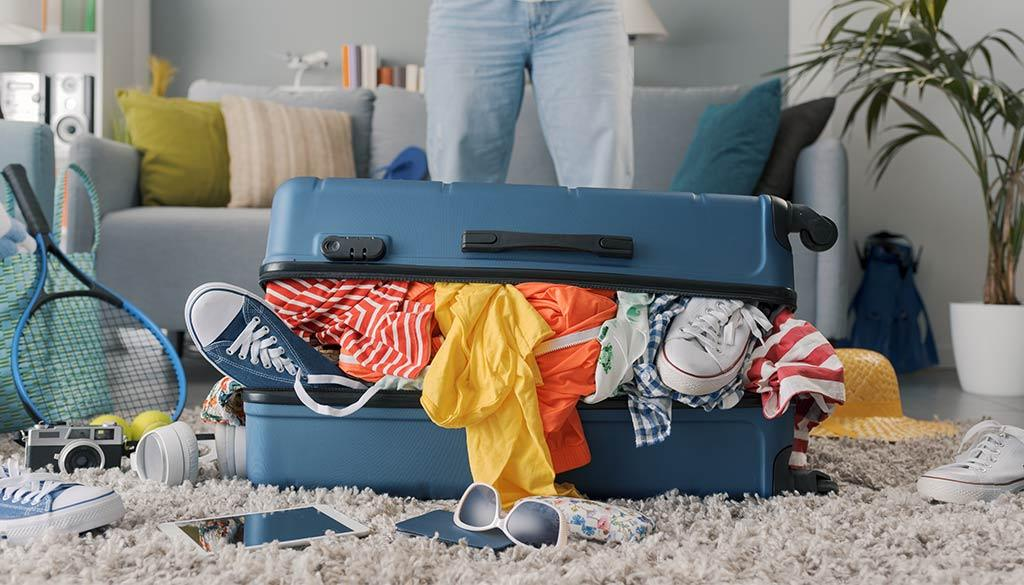
By the time the trip begins, something already feels heavy. Not just the luggage, but the sense that travel has become something to manage rather than experience.
Many families eventually notice that overpacking doesn’t reduce stress the way they hoped. It quietly creates it.
Overpacking Turns Preparation Into Pressure
Packing is meant to support the trip.
When bags become overfilled, packing starts to feel like a test. Every item added feels important. Every decision feels final. The weight of responsibility settles in before the journey even begins.
Overpacking creates pressure because it suggests that ease depends on having everything. If something goes wrong, it feels like a packing failure rather than a normal part of travel.
That pressure often lingers throughout the trip.
Too Much Stuff Increases Mental Load
Overpacked bags are harder to manage mentally.
More items mean more remembering. Where is that charger? Which bag has the extra layers? Did we bring the thing that fixes this moment? Decision-making multiplies quickly.
Instead of reducing worry, overpacking keeps the mind busy tracking possessions.
Families often feel more scattered with more stuff, not more secure.
Overpacking Makes Transitions Harder
Travel is full of transitions.
Unpacking. Repacking. Moving between places. Getting ready quickly. When there’s too much packed, each transition takes longer and requires more effort.
Small moments become logistical challenges. Finding what’s needed takes time. Reorganizing becomes constant.
Stress builds not from major problems, but from repeated friction in these everyday transitions.
Overpacking Signals a Lack of Trust
At its core, overpacking often reflects a lack of trust.
Not in people, but in adaptability. It’s a way of trying to control uncertainty by preparing for every possibility.
Families overpack because they want to prevent discomfort before it happens. But this can unintentionally communicate that discomfort would be unmanageable if it occurred.
Over time, families often discover they’re more capable than their packing suggested.
Too Many Options Can Be Dysregulating
Children often struggle with too many choices.
Multiple outfits, toys, and activities can feel overwhelming rather than comforting. Decision fatigue shows up as irritability or indecision.
Overpacking creates an environment where nothing feels settled because everything is available.
Fewer, familiar options often support calmer behavior than abundant variety.
Overpacking Shifts Focus Away From Experience
When families bring too much, attention often shifts to managing belongings.
Tracking bags. Protecting items. Searching for things. Packing becomes part of the daily rhythm of the trip.
This focus pulls attention away from shared moments, connection, and rest.
Travel stress grows when the trip revolves around possessions instead of people.
Overpacking Makes Rest Less Accessible
Ironically, overpacking can make rest harder.
Crowded spaces feel less calm. Searching through clutter takes energy. Settling into a new environment takes longer when there’s too much to organize.
Rest requires simplicity.
Families often find that when their space is lighter, their nervous systems feel lighter too.
Overpacking Extends Stress Into the Return Home
The effects of overpacking don’t end with the trip.
Unpacking becomes another overwhelming task. Laundry piles up. Items are scattered. Recovery takes longer.
What was meant to create ease ends up extending stress beyond the journey itself.
Families often feel relief only once everything is put away—long after the trip has ended.
Overpacking Can Increase Anxiety Instead of Reducing It
Having too much can heighten anxiety.
The fear of losing something important. The worry about managing belongings in unfamiliar places. The constant checking to make sure nothing is forgotten.
Overpacking creates more things to worry about, not fewer.
Stress grows when attention is divided among too many objects.
Families Often Learn This Through Experience
Most families don’t decide to stop overpacking intentionally.
They learn through contrast. A trip with fewer bags feels smoother. A simpler setup feels calmer. Something clicks.
They notice that missing items were manageable, but managing excess was exhausting.
This realization tends to arrive gently, over time.
Letting Go of Overpacking Is Emotional
Reducing what’s packed isn’t just practical.
It’s emotional. It means trusting flexibility. Accepting that some discomfort may happen. Believing that the family can handle unexpected moments together.
This shift can feel uncomfortable at first, but it often brings relief.
Overpacking Isn’t a Failure, It’s Information
Overpacking usually comes from care.
From wanting children to feel supported. From wanting the trip to go well. From wanting to avoid hard moments.
Seeing overpacking as information rather than a mistake helps families adjust without judgment.
It shows where stress lives, not where failure exists.
A Gentler Way to Think About Packing
Packing doesn’t need to solve every problem.
It needs to support the family enough to get from one place to another, trusting that adaptability will do the rest.
When families pack less, they often discover they gain something important.
Mental space. Physical ease. Emotional flexibility.
Travel stress eases not because everything is covered, but because less is being carried.
A Calm Closing Reflection
Why overpacking creates travel stress isn’t about discipline or minimalism.
It’s about how weight—physical and mental—affects experience.
When families release the idea that preparedness equals abundance, trips begin to feel lighter. Not perfect. Not effortless. But more manageable.
Over time, many families notice that what makes travel feel calm isn’t having everything on hand.
It’s knowing they can adjust, together, with what they already have.
AI Insight:
Many families gradually notice that the more they try to prepare for every possibility, the more travel begins to feel like something to manage rather than something to move through.