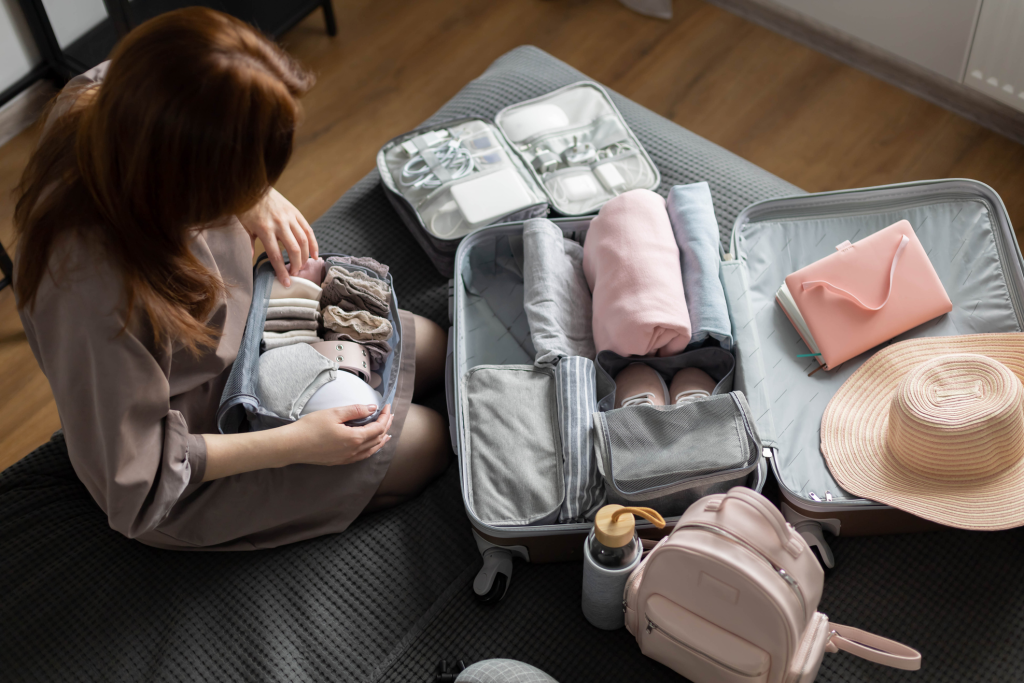
Packing rarely begins with suitcases.
It starts in the mind. Lists form quietly. Scenarios play out. What if someone gets cold? What if we forget the one thing that makes everything easier? What if this trip feels harder because we didn’t prepare well enough?
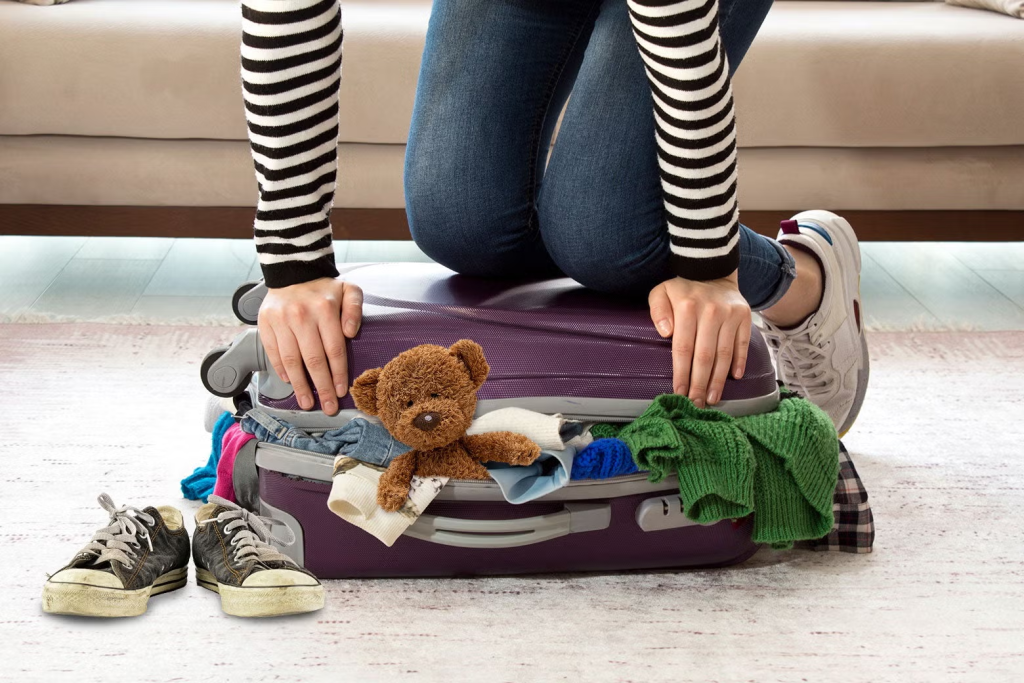
By the time bags come out, many parents are already tired. Not from the physical act of packing, but from the weight of anticipating needs, preventing problems, and trying to hold the entire trip together before it even begins.
Packing feels overwhelming for families not because it’s complicated, but because it carries far more responsibility than it appears.
Packing Holds the Pressure of the Whole Trip
For many families, packing feels like the moment where success or failure is decided.
There’s a quiet belief that if the right things are packed, the trip will go smoothly. If something important is forgotten, the trip will be harder than it needs to be.
This belief adds pressure to every decision. Each item feels consequential. Each choice feels final.
Packing becomes overwhelming because it carries the emotional weight of the entire trip, even though no suitcase could realistically hold that much responsibility.
Parents Are Packing for the Unknown
At home, families know what works.
They know where backup items live. They know which routines help. They know how to respond when something unexpected happens. Travel removes that safety net.
Packing becomes the attempt to recreate home in a temporary space.
Parents aren’t just packing clothes. They’re packing comfort, regulation, flexibility, and reassurance. They’re trying to anticipate needs that haven’t happened yet, in environments they can’t fully imagine.
That level of anticipation is mentally exhausting.
One Person Often Carries Most of the Mental Load
In many families, packing falls unevenly on one person.
Even when others help physically, the mental work often rests with one parent. Tracking what everyone needs. Remembering sizes, preferences, routines, medications, chargers, documents, and backups.
This invisible coordination adds to the feeling of overwhelm. It’s not just about items, but about responsibility.
Packing feels heavier when one person is holding the entire system in their head.
Packing Is Full of “What If” Thinking
Packing invites endless what-if questions.
What if the weather changes?
What if we need something at night?
What if routines fall apart?
What if this one missing thing makes everything harder?
These questions aren’t irrational. They come from care and experience. Families know that small discomforts can escalate quickly when tired or away from home.
But what-if thinking multiplies decisions. Every scenario adds another item, another bag, another layer of complexity.
Overwhelm grows not from the items themselves, but from the endless possibilities they represent.
There’s No Clear Signal That Packing Is “Done”
One of the hardest things about packing is that there’s no natural endpoint.
Unlike tasks with clear completion, packing can always be expanded. There’s always one more thing that might help. One more just-in-case item that feels prudent.
This lack of closure keeps the brain in a heightened state. It’s hard to relax when the task never feels finished.
Families often stop packing not because they’re done, but because they run out of time or energy.
Packing Happens When Everyone Is Already Stretched
Packing rarely happens during calm moments.
It’s squeezed into busy days, layered on top of work, school, routines, and emotional preparation for travel itself. Children may be excited, unsettled, or underfoot. Adults may be juggling deadlines and logistics.
This context matters.
Packing feels overwhelming partly because it’s happening when capacity is already low. The task itself might be manageable in isolation, but combined with everything else, it tips the balance.
Packing Feels Like a Test of Competence
Many parents quietly experience packing as a measure of competence.
If the trip is hard, it can feel like a personal failure. If something important is forgotten, it can feel like confirmation of not doing enough.
This internal pressure often goes unspoken, but it’s powerful.
Packing becomes less about preparation and more about proving that you’re capable of managing family life away from home.
That emotional layer makes every decision feel heavier.
Children’s Needs Multiply Packing Decisions
Packing for one person is straightforward.
Packing for multiple people—especially children—multiplies complexity quickly. Different sizes. Different sensitivities. Different comfort items. Different routines.
Children’s needs also change more rapidly. What worked last year may not work now. Parents are constantly updating their mental checklist.
Packing feels overwhelming because it requires holding many versions of “what might be needed” at once.
Packing Tries to Prevent Discomfort Before It Happens
Much of packing is an attempt to prevent discomfort.
Hunger. Boredom. Cold. Fatigue. Emotional dysregulation. Parents know that discomfort is harder to manage away from home, so they try to prevent it preemptively.
This intention is caring and reasonable.
But prevention requires imagination. And imagination, when paired with responsibility, can spiral quickly.
Packing becomes the effort to smooth every possible bump before the road is even visible.
The Myth of the Perfect Packing List
Many families search for the perfect packing list.
A list that accounts for every scenario. A list that ensures nothing is forgotten. A list that guarantees ease.
But no list can fully account for real life.
Trips unfold differently than expected. Some packed items go unused. Some forgotten items turn out not to matter. Some needs only become clear in the moment.
Packing feels overwhelming when families believe the list must be perfect.
Comparison Makes Packing Harder
Packing is also influenced by comparison.
What other families bring. How prepared others seem. Images of effortless travel that suggest packing should be simple and streamlined.
These comparisons increase pressure. They create the sense that overwhelm is a personal shortcoming rather than a natural response to responsibility.
Packing feels heavier when families believe they’re the only ones struggling with it.
Packing Is Emotional, Not Just Practical
At its core, packing is emotional work.
It’s about care. Protection. Preparation. Love expressed through foresight. Wanting children to feel safe and supported in unfamiliar places.
Recognizing this can soften the experience.
Packing feels overwhelming not because parents are doing it wrong, but because they’re doing it with deep care.
Why Packing Often Feels Better Once the Trip Begins
Interestingly, many families notice that the overwhelm fades once they’re on the road.
The bags are closed. Decisions are made. Reality replaces imagination. Needs become clearer and more manageable.
This shift highlights something important.
Packing feels hardest when everything is hypothetical. Once the trip begins, families move from anticipation to response—and response is often easier than prediction.
Letting Packing Be “Good Enough”
One of the most relieving shifts families can make is allowing packing to be good enough.
Not perfect. Not comprehensive. Just supportive.
Good enough packing assumes adaptability. It trusts that families can problem-solve. It accepts that some discomfort is part of travel and doesn’t need to be eliminated in advance.
This mindset reduces overwhelm by releasing the need to anticipate everything.
Sharing the Mental Load Changes the Experience
Packing often feels lighter when the mental load is shared.
Talking through needs together. Writing things down. Involving older children in their own preparation. Dividing responsibility rather than centralizing it.
Sharing doesn’t eliminate complexity, but it reduces isolation.
Packing feels less overwhelming when it’s not carried alone.
A Gentler Way to View Packing
Packing isn’t a test. It’s a transition.
It marks the movement from home life into something unfamiliar. That shift naturally brings uncertainty and effort.
Families don’t need to eliminate that feeling to pack well. They just need to understand it.
Packing feels overwhelming because it asks parents to imagine the future, hold responsibility for others, and let go of control—all at the same time.
That’s a lot.
A Calm Closing Reflection
Why packing feels overwhelming for families has less to do with suitcases and more to do with care.
Packing carries hopes for ease, fears of difficulty, and a deep desire to support everyone well. It happens when energy is low and expectations are high.
When families recognize packing as emotional work—not a personal failing—it becomes easier to approach with compassion.
Not everything needs to be anticipated. Not every need needs to be prevented. Families are more adaptable than they give themselves credit for.
Packing doesn’t have to feel calm to be effective.
It just has to be enough to get the family from home to away—where real life, with all its flexibility and resilience, takes over.
And often, once the bags are zipped and the journey begins, families discover what they needed most wasn’t packed at all.
It was already with them.