Healthy screen balance rarely starts with a plan.
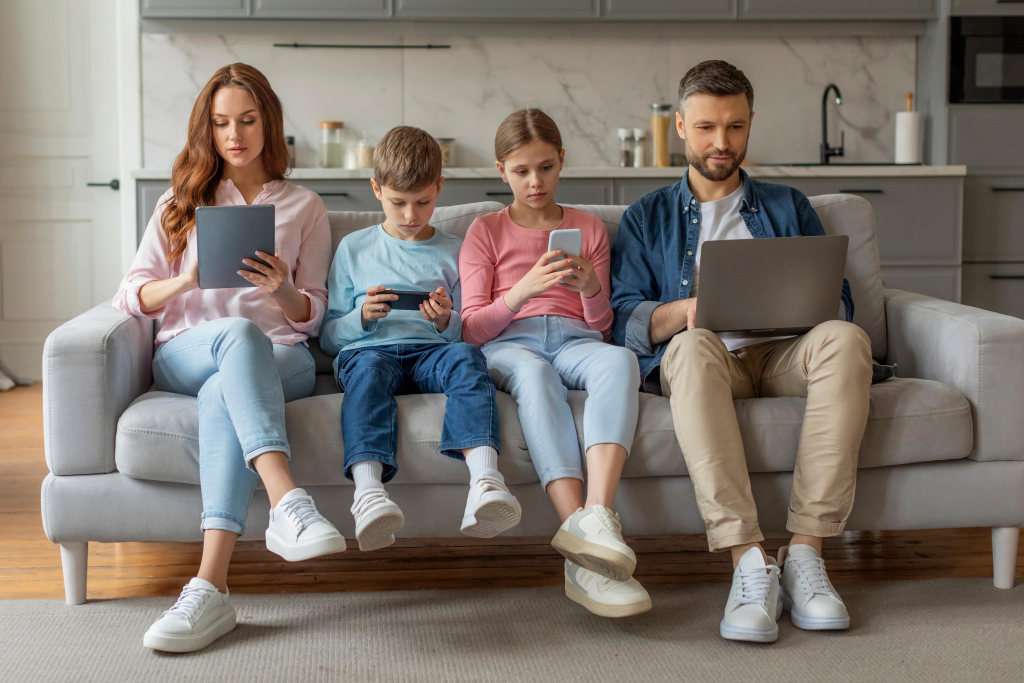
It usually begins with a feeling. A sense that something is slightly off, or that something is quietly working. An evening that feels calmer than usual. A weekend where screens fade into the background without effort. A routine that no longer needs constant negotiation.
For most families, screen balance isn’t achieved through strict limits or perfect systems. It’s created gradually, through small adjustments that align technology with real life.
Understanding how families create healthy screen balance helps shift the focus away from control and toward rhythm.
Balance Is Built Around Daily Life, Not Rules
Families don’t live by rules alone. They live by routines.
Mornings have a certain pace. Afternoons carry momentum. Evenings slow down in familiar ways. Healthy screen balance emerges when screens fit into these natural patterns instead of interrupting them.
Rather than asking, “How much screen time is allowed?” families who feel balanced often ask, “When does screen time fit best?”
This shift matters. Timing often shapes experience more than duration.
Why Predictability Reduces Tension
One of the strongest foundations of healthy screen balance is predictability.
When screens tend to appear at certain points in the day, there’s less uncertainty. Children know what to expect. Adults spend less energy deciding in the moment.
Predictability doesn’t require rigidity. It simply creates a general rhythm. Screens might be part of winding down after dinner, or a short pause between activities, or a shared moment earlier in the evening.
When expectations are clear, screen time becomes less charged.
How Families Use Screens to Support Transitions
Transitions are often the most challenging parts of the day.
Moving from school to home. From activity to rest. From play to bedtime. Screens can either complicate these transitions or support them, depending on how they’re used.
Families who find balance often use screens as bridges rather than destinations. A short show to signal the shift into evening. Music to help move from cleanup to calm. A timer that gently marks what’s next.
When screens support transitions instead of extending them, balance feels more natural.
Why Shared Screen Time Feels Different
Not all screen time feels the same.
Shared screen experiences often feel lighter than solo ones. Watching something together, playing a cooperative game, or looking at photos as a family creates connection rather than separation.
Families who experience healthy screen balance often include shared screen moments intentionally. These moments have clear beginnings and endings, which makes them easier to step away from.
Connection softens the pull of screens.
The Role of Energy and Capacity
Screen balance shifts depending on energy levels.
On well-rested days, alternatives to screens feel accessible. On tired days, screens may offer needed rest or predictability. Families who create balance don’t ignore this reality.
Instead of applying the same approach every day, they respond to capacity. They notice when screens are filling a gap and when they’re adding friction.
This responsiveness keeps balance flexible rather than fragile.
Why Balance Is Easier With Fewer Decisions
Decision fatigue plays a big role in screen stress.
When families decide about screens repeatedly throughout the day, tension builds. Healthy screen balance often comes from reducing the number of decisions required.
Using screens at roughly the same times. Charging devices in the same places. Keeping similar expectations on most days.
These patterns remove the need for constant evaluation. Balance becomes part of the routine rather than a daily debate.
How Modeling Shapes Screen Balance
Children learn screen habits by watching adults.
Not through lectures, but through everyday behavior. When parents pause before reaching for a phone, name when they need a moment online, or put devices away during shared time, they model balance quietly.
This modeling isn’t about perfection. It’s about awareness.
Children notice when screens are tools rather than default companions. That understanding supports balance over time.
Why Balance Isn’t About Elimination
Healthy screen balance doesn’t require removing screens.
It requires right-sizing them.
Families who feel balanced don’t see screens as something to fight against. They see them as one option among many. Screens are available, but not central.
This mindset reduces urgency. When screens aren’t framed as scarce or forbidden, they often lose some of their intensity.
Balance grows when screens are present without being dominant.
How Environment Influences Screen Use
The physical environment shapes habits more than rules.
Where devices are charged. Where screens are used. Whether screens are part of shared spaces or private ones.
Families often find balance by making small environmental changes. A charging station outside bedrooms. Screens used in common areas. Devices put away during certain routines without formal announcements.
These choices guide behavior gently, without constant discussion.
Why Balance Looks Different for Every Family
There is no single version of healthy screen balance.
Work schedules differ. Children’s needs vary. Family rhythms are unique. What feels balanced for one household may feel off for another.
Families who create balance trust their own experience more than external comparisons. They notice what supports calm and what disrupts it.
Balance becomes personal rather than prescriptive.
Adjusting Balance as Children Grow
Screen balance isn’t static.
As children grow, their independence increases. Their relationship with technology changes. What worked one year may need adjustment the next.
Families who adapt well revisit expectations regularly, without judgment. They adjust timing, context, and access as needed.
This flexibility keeps balance relevant rather than rigid.
Why Conversation Supports Balance
Open conversation helps screen balance evolve.
Talking about how screens feel, when they help, and when they don’t builds shared understanding. These conversations don’t need to be formal or frequent.
Simple check-ins create alignment. Children feel included. Adults feel less alone in decision-making.
Balance grows when families navigate screens together.
Letting Go of Perfect Balance
Healthy screen balance isn’t a fixed state.
Some weeks feel easier than others. Some seasons require more flexibility. Balance shifts with stress, schedules, and energy.
Families who feel at ease with screens allow for imperfection. They focus on overall patterns rather than individual moments.
One long day doesn’t undo balance. One adjustment doesn’t define success.
A Calm Perspective to Carry Forward
Families create healthy screen balance not by controlling every minute, but by paying attention.
They notice rhythms. They respect transitions. They respond to energy. They choose predictability over pressure.
Screens find their place when family life leads and technology follows.
In that balance, screens become part of the day without taking it over.
Not perfectly. Not permanently. But in a way that feels supportive, sustainable, and grounded in how families actually live—one ordinary day at a time.